Plan Your Trip: Taolagnaro
Taolagnaro (Fort Dauphin) is rare in Madagascar: it’s green, coastal, and easy to navigate once you arrive. Beaches are in town, day trips and lemurs are close, and most travellers can explore comfortably without complicated logistics. With a little planning, five days gives you everything.
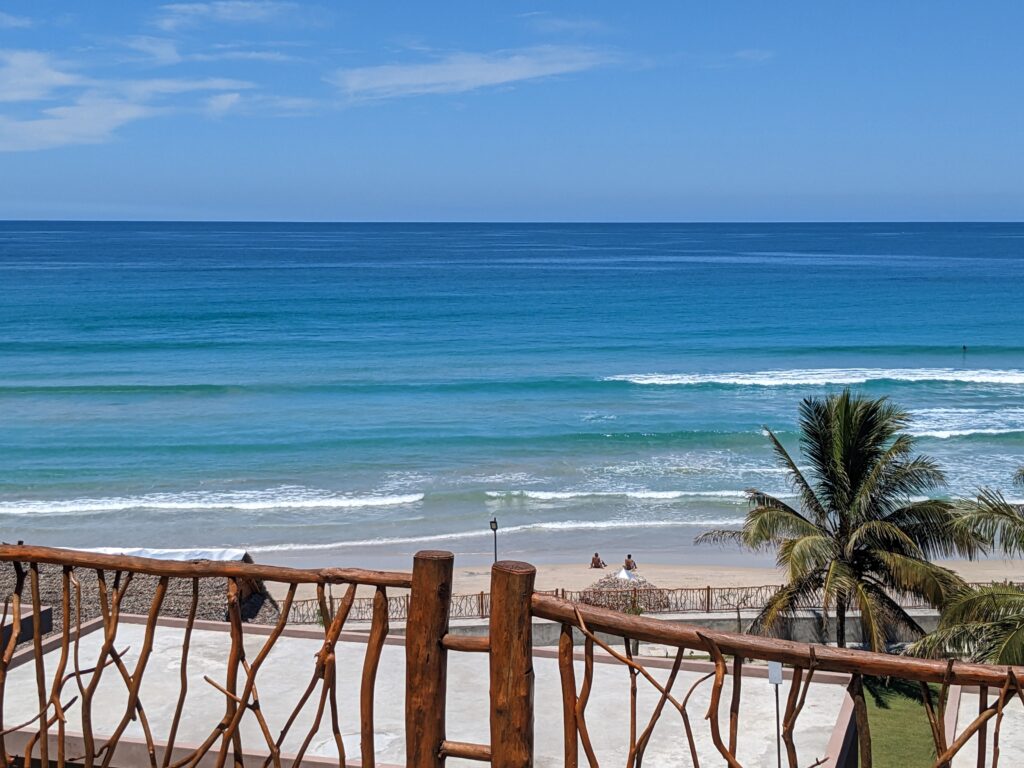
View above Ankoba Beach from the Ankoba Beach Hotel
Recommended minimum: 5 nights. Three nights is doable for a quick look, but five gives you enough time to see the town beaches, do at least one day trip (Lokaro or Nahampoana), and have a buffer day for weather, rest, or spontaneous plans. To add Berenty Reserve or a southern route toward Lavanono, build in more.
- What takes longer than you think: The distances on a map look manageable — they’re not always. Roads around Fort Dauphin are well-paved and good quality, even out to Lokaro (north of town). But Berenty is still a 2-hour drive each way. Lokaro and Sainte Luce are about 1 hour. Lavanono is 4 to 6 hours on increasingly rough roads. It’s south of Ambovombe, or continuing north past Sainte Luce, where conditions deteriorate. Plan overnight stays for anything beyond Lokaro.
- Book lodging in advance: Fort Dauphin has a limited number of good beds. Some properties sell out entirely, especially during peak season and around public holidays. Don’t assume you can figure it out on arrival. Book through Anosy One.
- Parks and reserves: Most don’t require pre-booking for entry, but a guide may be required or strongly recommended depending on the park. Nahampoana and Domaine de la Cascade require advance booking for meals and overnight stays specifically.
- Guides: You don’t need a guide for most beaches and town exploration. For hiking Pic Saint-Louis, wildlife spotting, or multi-day trips, a good local guide makes a real difference.

Fort Dauphin from above
You fly in. Almost all visitors connect through Antananarivo (Tana) and take a domestic Madagascar Airlines flight to Fort Dauphin’s Marillac Airport (FTU). Flights are typically 1.5 to 2 hours from Tana. There are also connections via Toliara.
Allow time in Tana for connections — domestic schedules in Madagascar can shift, and it’s worth building in a buffer rather than cutting it close. Book domestic legs as early as possible, especially in peak season.
- From Antananarivo (Tana): Madagascar Airlines operates the main domestic route. Book direct or through any reputable Madagascar tour operator.
- Road option (RN7/RN13): Technically possible — RN7 south from Tana to Ihosy, then RN13 east to Fort Dauphin. This is a serious multi-day road journey and makes sense only as part of a longer southern circuit, not as a way to simply “get to” Fort Dauphin. Fly.
- Airport to town: 15 minutes. Hotel transfers are common — confirm in advance. Taxis available at the airport, roughly $10 USD to the centre.
How far is everything? Fort Dauphin is compact and most of the key beaches are in or close to town. The roads around Fort Dauphin are actually excellent — beautifully paved to Berenty, and good even out to Lokaro (north of town). It’s south of Ambovombe, or north of Sainte Luce past Lokaro, where roads get rougher and slower. The distances still take time — don’t underestimate them.
- Libanona BeachIn town — walkable
- Mon SeigneurIn town — opposite Libanona
- Ankoba BeachIn town — bajaj or walk
- Ambinanibe & Bevava (south)~15–20 min by car
- Nahampoana Reserve~10 min by car or bajaj
- Evahatra~20 min + short pirogue crossing
- Lokaro Peninsula (north of town)~1 hour by car or boat
- Sainte Luce (north, past Lokaro)~1 hour by car
- Domaine de la CascadeSouth of town — ~20 min by car
- Berenty Reserve~2 hours by car
- Lavanono4–6 hours by 4×4

View north from the Pic Saint-Louis summit
Fort Dauphin doesn’t have a clean “rainy season” and “dry season” the way many Madagascar guides suggest. The honest version is more nuanced — and more encouraging.
Rain here tends to come in bursts of a few days at a time, followed by dry stretches. You can get 3 to 4 weeks of drought at any point in the year, and even during wetter periods, rain often falls at night while the days stay sunny. This is not the UK. The sun comes out most days, even in the wettest months.
Fort Dauphin sits on a peninsula, which means it’s almost always breezy. That’s a feature, not a bug — the wind keeps the heat manageable and the landscape green. The exception is December, which tends to go still and humid. The windiest months are September and October, though strong days can come at any time of year.
Fort Dauphin has a solid range of hotels and apartments for a town of its size — from beachfront boutique hotels to simple, well-run guesthouses and self-catering apartments. Book ahead. Good options fill up, particularly during peak season and Malagasy public holidays.
- Hotels: Ankoba Beach Hotel, Talinjoo, Croix du Sud, Vintana (Kaleta), Vah’Inn, Hotel Lamarina, Ravinala Anosy, Nepenthes Bungalows — see the full hotels page.
- Apartments & self-catering: Voky Be Lodging, Takasira Appart Hôtel, Résidence l’Anse Dauphine, Villa Océane — see the apartments page.
- Base location: Staying in or near town gives you easy access to beaches, restaurants, and bajaj transport. Vah’Inn is 15 minutes south — beautiful but less convenient for exploring on foot.